Section Menu
Unraveling Ozone
DOWNLOAD THE AIRNOW APP TODAY!

IT’S OZONE SEASON IN CLARK COUNTY!
“Ozone season” in Southern Nevada runs from April 1 to Sept. 30; when ground-level ozone formation increases in Clark County, leading to days when our outdoor air quality could be moderate or worse.
“But I thought ozone was a good thing. It protects us from the sun’s ultraviolet rays.”
That is correct. Up in the troposphere, the ozone layer provides a protective shield against the sun’s harmful UV rays (still, wear sunscreen!). However, when ozone forms at the ground level, it can be harmful to breathe; especially for children, older adults, people with breathing sensitivities (asthma, COPD, etc.) and even your pets.
“What causes ground-level ozone”
Great question. Ground-level ozone is formed by a chemical reaction. This chart explains it.

Think of it this way: volatile organic compounds (VOCs)—that is, anything that puts off a fume such as chemicals, paint, fuel, plants/vegetation combines with nitrogen oxides (NOx). Examples of NOx would be anything that combusts, such as a car engine, fire, industrial emissions. When NOx and VOC cook in the sunlight for a few hours, ozone forms.
“How do you know if ozone is elevated?”
Our Division of Air Quality monitors and tracks several pollutants, including ozone. We have a network of 18 active monitoring stations throughout Clark County so we get the best and most accurate picture of what’s happening with the air we share, 24/7.
Go ahead and check it out. Click here to see our monitoring network.
“What do the colors mean?”
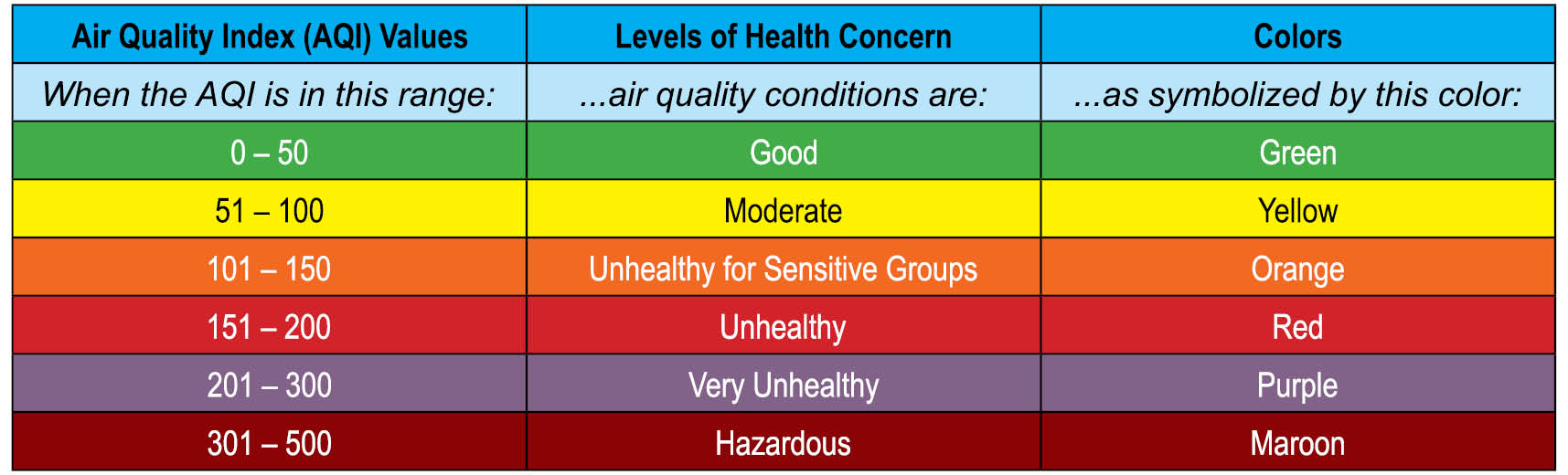
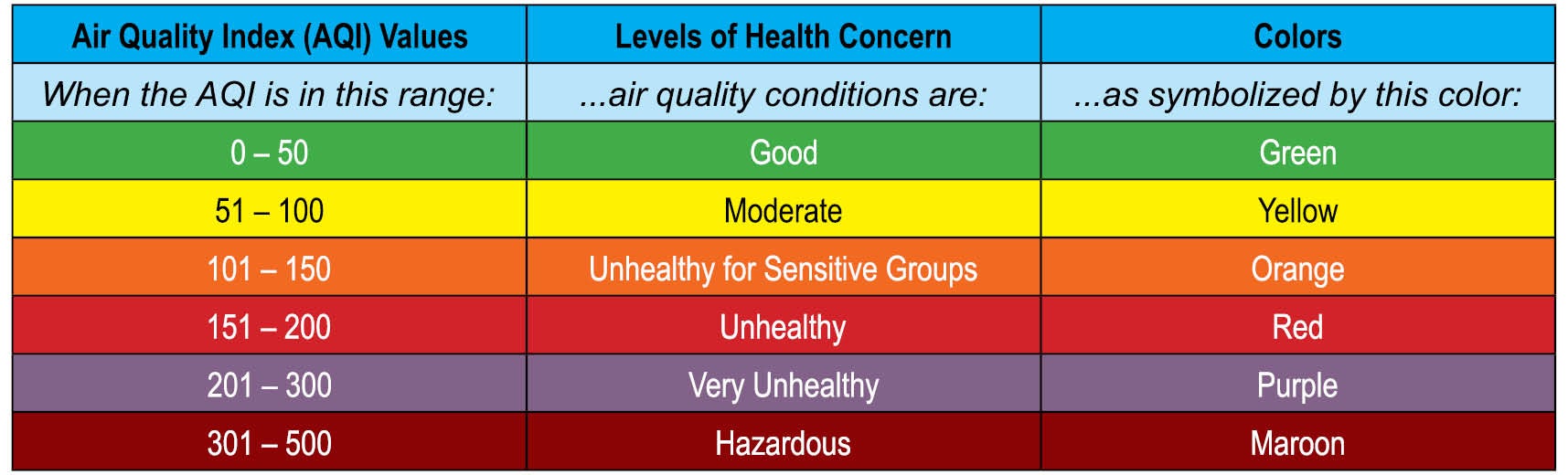
We use the EPA’s Air Quality Index (AQI) to assign a color to determine if air quality is good, moderate or in the unhealthy range. The colors provide a simple, visual explanation.
“What should I do to protect myself on high-ozone days?”
The best thing you can do is stay informed. We provide a daily air quality forecast you can find in a few places:
- On our Monitoring website.
- On our social media channels: @ClarkCountyDES on Facebook, Instagram and X.
- You can also download the AirNOW app to your device.
- You can also receive daily email messages by signing up for Enviroflash.
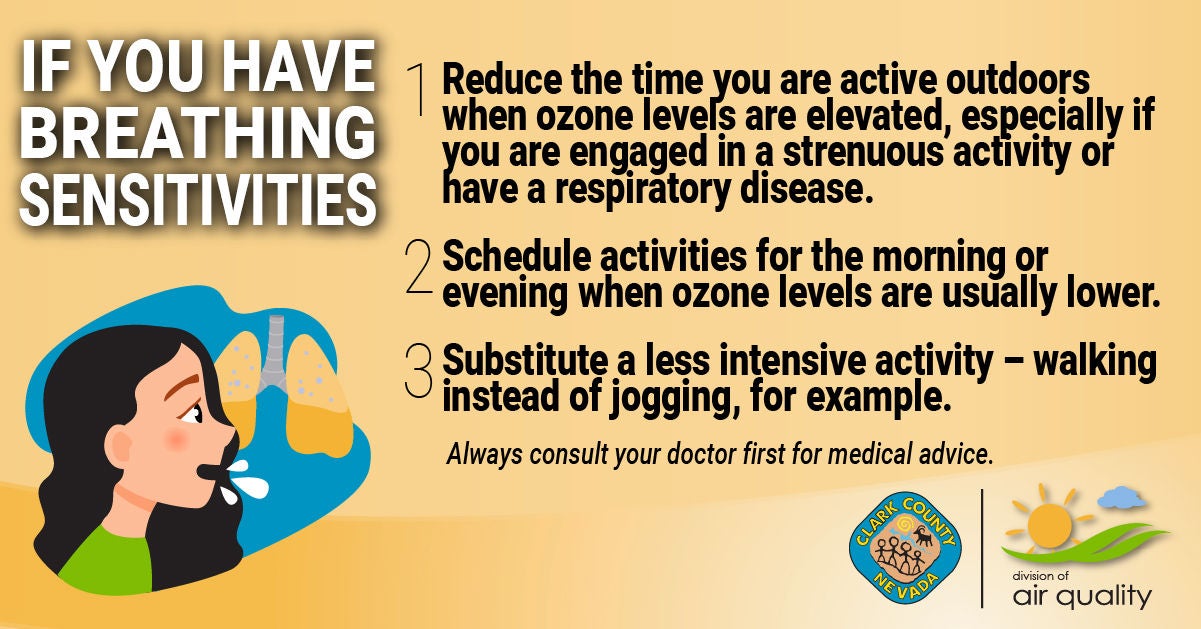
We also encourage you to follow a few simple tips to protect your lungs.
- Reduce your outdoor activity time when ozone levels are elevated.
- If you like to exercise outdoors, schedule activities in the morning, when ozone levels are typically lower.
- Substitute a less intense activity: walk instead of jog, for example.
- And finally, always consult your doctor for specific medical advice.
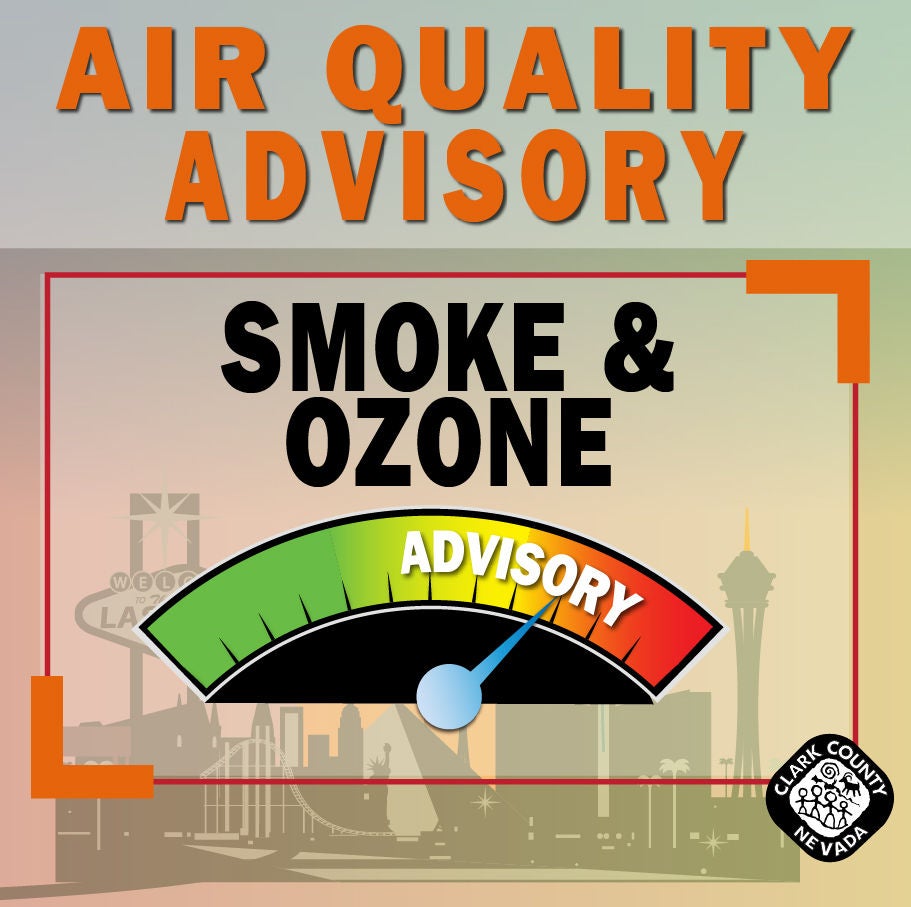
SEASONAL ADVISORY FOR OZONE/WILDFIRE SMOKE IN EFFECT UNTIL SEPT. 30
Our seasonal wildfire smoke-ozone advisory is in effect from Wednesday, April 1 - Wednesday, Sept. 30. As wildfires have become more prevalent during the summer months in recent years, smoke from distant fires frequently blows into Clark County, elevating particulate matter pollution as well as influencing ozone formation. Wildfire smoke has contributed to some of our heaviest ozone seasons.
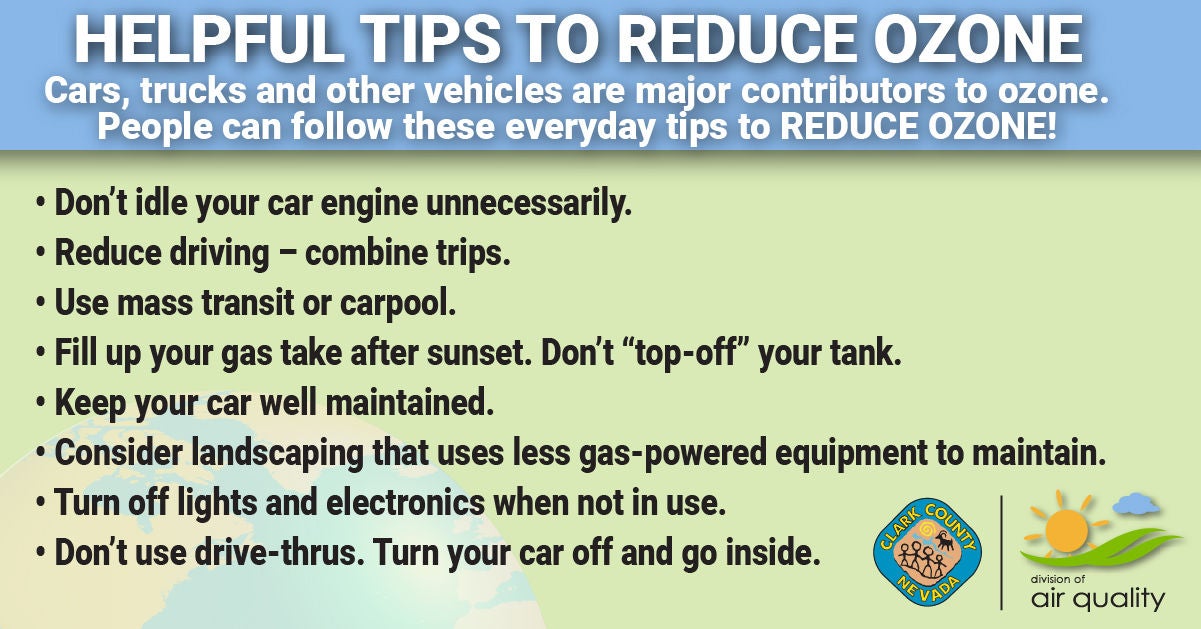
Check out the information below for more information about what causes ozone, how you can protect yourself from it and how you can help reduce ground-level ozone in the summertime. Click here for the advisory.
Understanding Ground-Level Ozone
You have questions. We've got answers. Click a topic below for helpful videos, infographics and information to help you understand ozone, how it impacts local air quality (and your health) and how you can help reduce ozone.
Unraveling Ozone
Each summer, ground-level ozone presents Clark County’s greatest air quality challenge. What causes ozone? How is it created and what can we do about it? Watch this video and learn how you can help us protect the air we share.
What is an Ozone Exceedance?
According to the EPA, an exceedance for ground-level ozone occurs when ozone concentrations are greater than 70 parts per billion (ppb) over the course of eight rolling hours per 24 hours in a day. As concentrations of ground-level ozone increase, so increases the Air Quality Index. This chart provides a year-over-year total of days when ozone concentrations exceeded the current 70 ppb standard.

What is the Air Quality Index?
The Air Quality Index (AQI) is a measurement tool to gauge air pollution. It runs from 0 – 500 and is used to measure six pollutants: carbon monoxide, lead, nitrogen dioxide, ozone, particulate matter and sulfur dioxide. The higher the AQI value, the greater level of air pollution and greater the health concern.
How Does Ozone Form?
Ground-level ozone is formed when volatile organic compounds (VOCs) mix with oxides of nitrogen (NOx) in ultraviolet rays and heat. VOCs are emitted gases from fumes from fuel, paints, chemicals, personal care products and even some plants and vegetation.
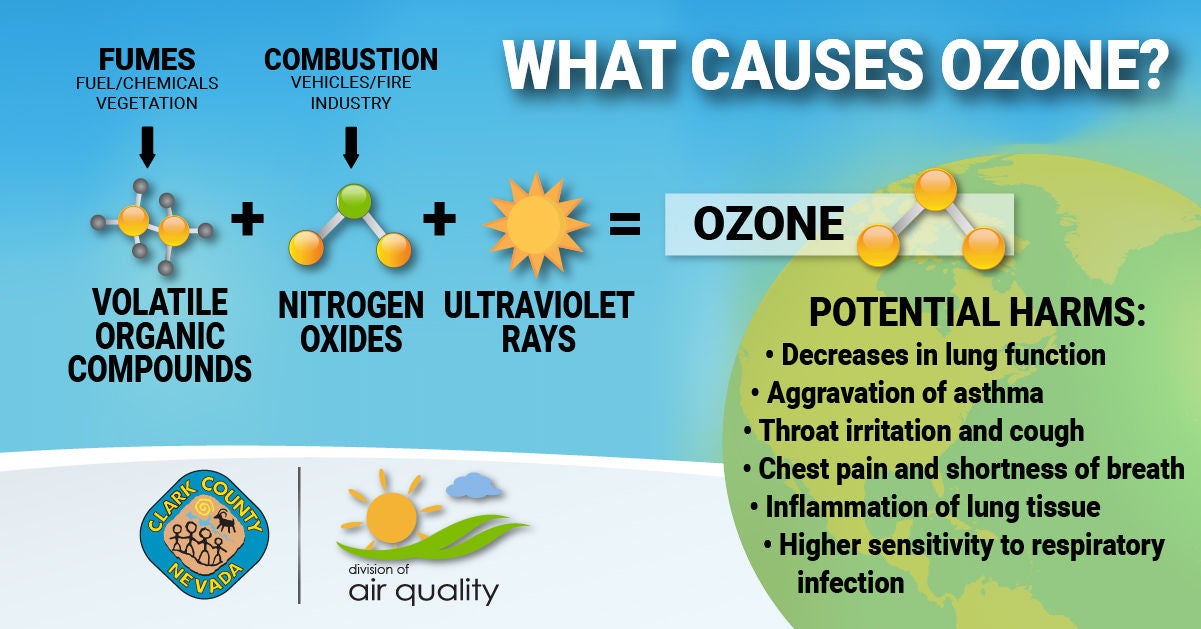
Examples of NOx emissions are vehicle exhaust, gases from industry and wildfire smoke. Stagnant weather conditions and the topographic structure of the Las Vegas Valley help trap these pollutants, causing levels to rise. Exposure to ozone can irritate your respiratory system and cause coughing, a sore throat, chest pain and shortness of breath even in healthy people, according to the EPA.
What are You Doing About Ozone?
Short answer: a lot. In addition to our regulatory duties of compliance and permitting actions toward local businesses with active air permits, we also monitor local air quality and keep you informed if and when ozone, dust or other particulate matter may impact outdoor air quality.
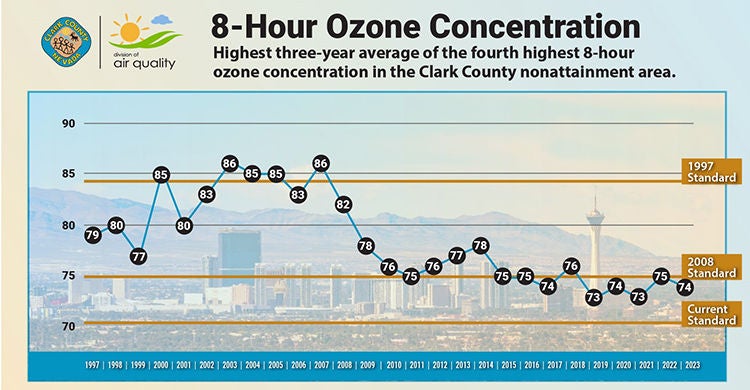
Currently, we're developing a series of new rules, designed to reduce homegrown, ozone-producing pollutants. The goal of these rules is to reduce ozone concentrations in Clark County to fall below the U.S. Environmental Protection Agency’s standard for ozone. As this chart below depicts, ground-level ozone in Clark County has reduced greatly over the past 20 years or so. Nevertheless, we’re working every day to improve it.