Section Menu
Pinyon Jay
- About Us
- Important Notices
- Advisory Board to Manage Wildlife
- Air Quality Applications/Forms
- Air Quality Complaints
- Air Quality Dust Classes
- Air Quality Dust Permitting Portal
- All-In Clark County
- Division of Air Quality
- Desert Conservation Program
- Lands Bill
- Public Communications & Outreach
- Records Requests
Pinyon Jay
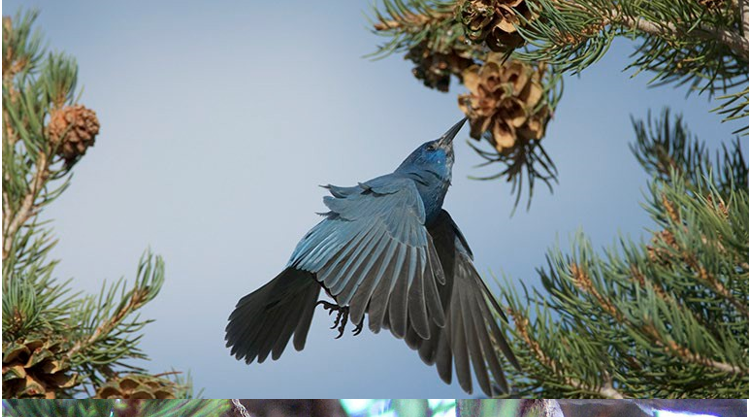
- Pinyon Jay-scientific name- Gymnorphinus cyanocephalus- meaning “naked nosed, blue headed”.
- Pinyon Jay is a species of jay and is the only member of genus gymnorphinus. Genus- (class or group of something; gymnorphinus- (means bare nostrils).
- Pinyon Jay is protected by the Migratory Bird Treaty Act, but unfortunately there are no legal protections in place to protect the Pinyon Jay and its pinyon-juniper woodland habitat.
- Average lifespan of Pinyon Jay is 5 to 6 years; some Pinyon Jays have been known to live up to 14 years.
- Pinyon Jays are monogamous, unlike other bird species who adjusted by seeking new mates.
- International Union for Conservation of Nature (IUCN) Red List has the Pinyon Jay listed as Vulnerable. The Pinyon Jays are classified by U.S. Fish and Wildlife as a species of concern. IUCN Red List Status: Vulnerable.
- Scientists are understandably alarmed by Pinyon Jays precipitous losses in number and habitat, but they are also cautiously optimistic with reason to believe that Pinyon Jays may be smart enough to create a brighter future for themselves.
- Historically known as the blue crow or Maximilian’s Jay, it is a jay between the North American Blue Jay and the Eurasian Jay in size.
- Pinyon Jays are corvids (a bird of the crow family) like crows and ravens, and therefore highly intelligent and research has shown them to be highly adaptable to change.
- Pinyon Jays in the last 50 years population has declined by an estimated 80 percent. This was revealed “The Breeding Bird Survey that suggested that the Pinyon Jays have been declining for many years, at a rate as high as 5 percent per year”. Partners in Flight estimating that there are only 210,000 Pinyon Jays left in Nevada with 27.5 percent of the global population. They need the protection of the Endangered Species Act to avoid extinction.
- Pinyonjay5Z
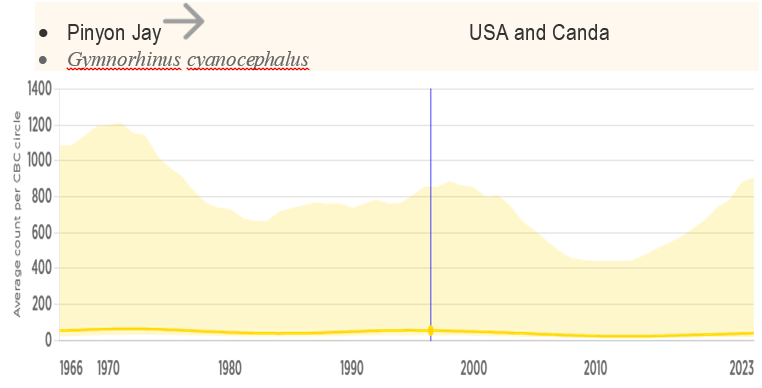
(CBC) The Christmas Bird Count- is a census of birds in the Western Hemisphere, performed annually in the early Northern-hemisphere winter by volunteer birdwatchers and administered by the National Audubon Society. It occurs December 14 – January 5 every season. This chart shows how this species’ relative abundance has shifted in recent decades.
- EGGS/INCUBATION PERIOD OF PINYON JAY

Clutch Size: 2-5 Eggs, sometimes 3-6 Number of Broods: 1 Brood
Egg Length: 1.0-1.3 in (2.6-3.4 cm)
Egg Width: 0.8-0.9 in (2-2.3 cm)
Incubation Period: 17 days, done by female and male feeds female during incubation.
They young are tended by both parents, and sometimes by the young of previous nesting’s.
Nestling Period: 21-22 days
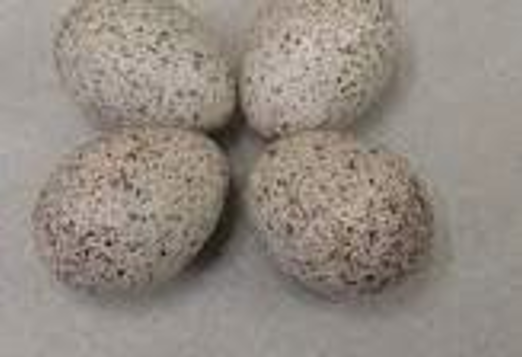
Egg Description: Pale blue with dark brown speckles, usually concentrated around large end.
HABITAT OF PINYON JAY
- Pinyon Jays are residents of the western U.S. which covers most of Nevada, Utah, Arizona and New Mexico. This range includes portions of California, Oregon, Idaho, Montana, Wyoming and Colorado.
- Pinyon Jays live in both deciduous and coniferous woodlands, parks, and mature gardens. They are often seen flying across a woodland glade giving a screeching call.
- Pinyon Jays survival depends on healthy pinyon-juniper woodlands and then the woodlands depend on the pinyon jay to disperse their seeds across the landscape.
- This species is crestless, and travel in large noisy flocks throughout pinyon-juniper, chaparral, and scrub-oak woodlands in the western United States. They give a variety of rather clear nasal calls, as well as rougher notes to keep in touch with the group and stick together year-round, breeding and foraging together.
- Pinyon Jays are noisy groups though they may form large of more than 250 to 500 members as they are watching out for predators while their companions are feeding seeds.
- Pinyon Jays prefer to forage near the edges of the pinyon-juniper woodlands, and do not spend time in the denser middle parts of the forest. This habitat-use pattern of the birds is a cause for concern, because current forest management practices often result in unnaturally sharp boundaries in some areas between pinyon-juniper woodlands and sagebrush or grassy areas, which do not suit the birds.
- Landscapes have changed from one where pinyon-juniper woodlands have trees of various ages with many open areas, to a landscape much more dominated by older, denser, and more extensive woodlands. There is concern that there will be less of the transitional edge habitats that Pinyon Jays seem to prefer.
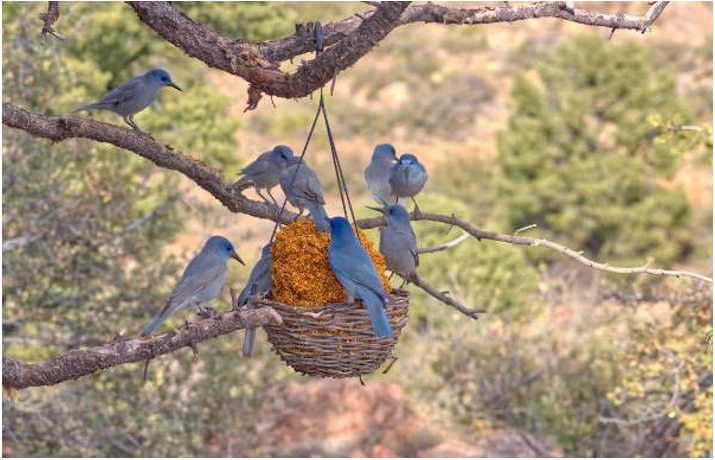
- Pinyon Jays scour pinyon-juniper patches for seeds and generally aren’t found alone. Large groups forage in trees and on the ground. They move across the landscape in tightly packed flocks flying with quick and strong wingbeats.
- Each flock has an established home range but may become nomadic and do not migrate but will wander long distances when food is scarce and when seed crops are low or may wander widely especially in fall and winter. Pinyon Jays do not migrate but will wander long distances.
- Pinyon Jays flocks post sentinel birds, which sound the alarm whenever they spot intruders, which makes it difficult to observe them closely.

DIET OF PINYON JAY
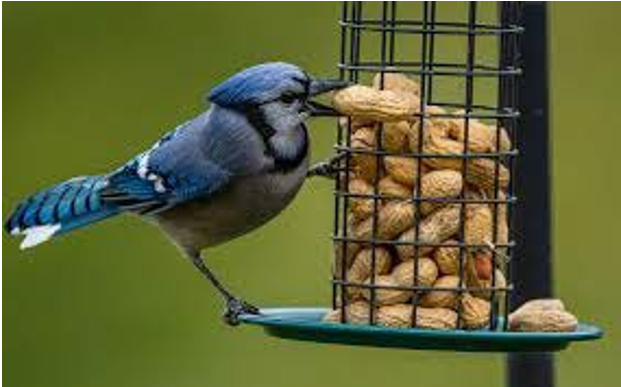
- Pinyon Jay are Omnivorous and will eat juniper berries in the winter and insects (Bettles, Caterpillars, and Grasshoppers, ants, larvae, nymphs) in the summer and target Pinyon pinecones in the fall season, they also eat small lizards, acorns, and visit bird feeders which have sunflower seeds, suet, cracked corn and peanuts.
They also eat seeds of other pines and many other plants, small fruits, nuts, waste grain. They also sometimes eat bird eggs and hatchlings. They occasionally fly out to catch insects in the air.
- Pinyon Jay and Pinyon Pine share more than a name; their fates appear to be inextricably linked, saving adult jays and their broods from starving during winter and early spring breeding seasons. In turn, the jays have helped disperse the seeds of pinyon pines.
- Pinyon Jays have evolved an expandable neck pouch to carry pinyon seeds to caching areas.
- In late summer and fall, when the seeds are ripe, the jays pack their throats with as many as 56 pinyon seeds at a time.
- . When Pinyon Jays have full throats, flock mates shout rallying calls and fly off to a treeless caching area, walking shoulder to shoulder poking the seeds into the ground like farmers sowing a crop.
- Their excellent spatial memory helps them find buried seeds. They spend most of their time searching for seeds to be eaten on the spot, hiding in the ground or store in a tree crevice to eat later.
- Pinyon Jays recall nearly 95 percent of the time where they cached their seeds, leaving 5 percent of cached seeds in the soil where they have the potential to germinate a win relationship for both Pinyon Jays and pinyon pines.
- When the pinyon seed crop is poor, Pinyon Jays resort to eating less-nutritious ponderosa pine seeds and juniper berries, but during these seed-poor years most chicks don’t survive to adulthood.Pinyon Jay Nuts.png
NESTS OF PINYON JAYS
- Pinyon Jays nestling period is 21-22 days.
- Pinyon Jays nests in colonies, close together with usually no more than 1-3 nests in
any one tree.
- Pinyon Jays breed mostly in late winter, with the adults feeding largely on stored seeds, may nest again in late summer if pinyon pines produce an exceptional seed crop.
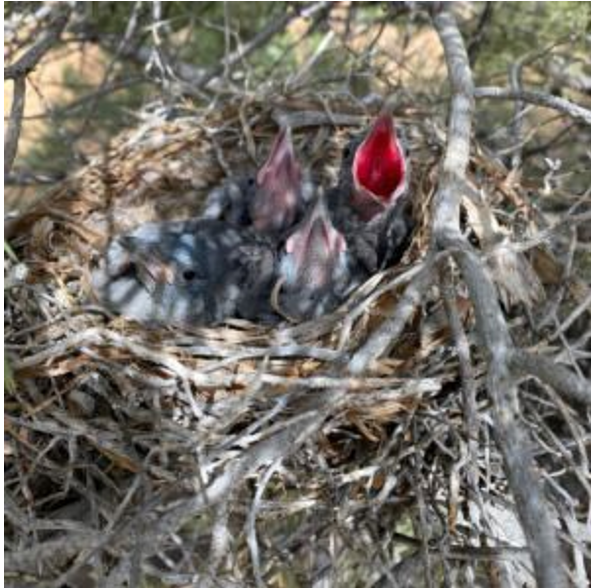
- Nest sites are usually 3-20’ above ground in juniper, oak, or pinyon, sometimes much higher in other kinds of pine. Nest are built by both males and females.
- Pinyon Jays build large, bulky cups of sticks, with a middle layer of grass and an inner cup of finer materials, such as feathers, horsehair and rootlets, or shredded bark. Males bring many sticks to the nest site, but females take care of weaving the grasses and other materials into the sticks. They often steal material from unattended nests of neighbors.
- Pinyon Jays nest in areas that had a good crop of seeds in the previous fall. In these areas they nest in ponderosa pine, pinyon pine, junipers anywhere from 3 to 115 feet above the ground. The nests can be next to the tree trunk or on the tip of a branch amongst dense foliage. In some areas they tend to place the nest on the south side of the tree for extra warmth.
- Both parents bring food for nestlings. Young leave nest about 3 weeks after hatching but continue to be fed by the parents and other members of the flock.
- Pinyon Jays are often found in loose flocks that consist of multiple breeding pairs and the offspring of those pairs from previous nesting seasons.
- Pinyon Jays have moderate to high nest colony site fidelity and prefer to nest in or near previously established locations when possible but will not reuse old nests.
T
THREATS TO THE PINYON JAY
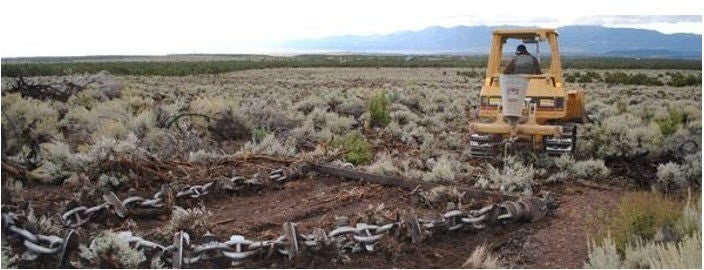
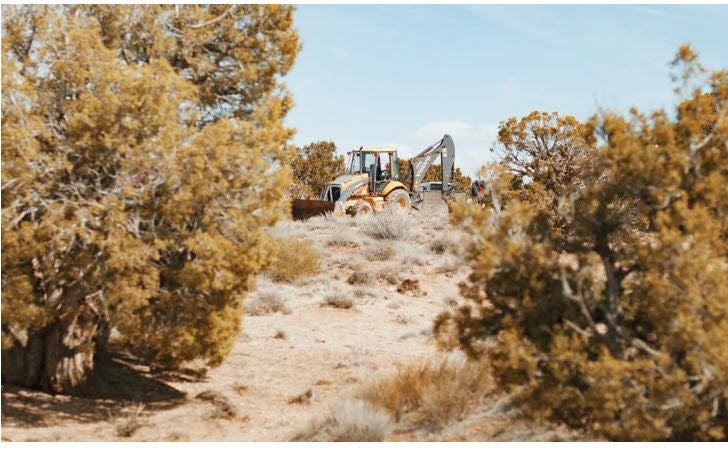
1)Clearcutting of Pinyon and Juniper forests done by (BLM) Bureau of Land Management- This method of deforestation that threatens to destroy pinyon juniper trees that are food for the Pinyon Jays.
BEFORE PHOTO:
AFTER:
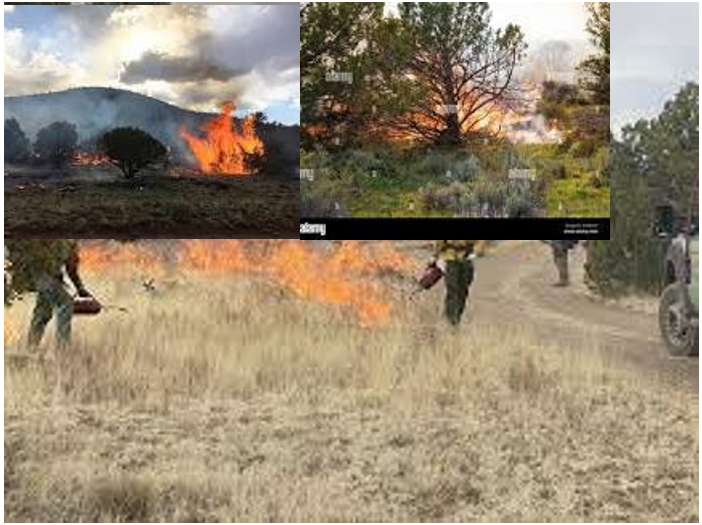
WILDFIRES IN PINYON AND JUNIPER FORESTS-Fire is another problem that the Pinyon Jays must face, because there are fires now sweeping through the West on an epic scale due to years of fire suppression. Pinyon Jays have home territories that they inhabit year after year as the breeding grounds of the flock burned, bird after bird, group after group, leaving their territory which they would never normally do.
DROUGHT-Pinyon Jays adapt physically and socially to short-term drought, and they can live, apparently quite well, if they have stands of trees for roosting, and large open areas nearby for catching. Hotter, drier weather has led the pinyon pines to produce fewer of the seeds needed for the birds to rely on which led to population drop by over 80 percent.

INSECT INFESTATIONS- There are many types of insect infestations on the juniper pines which the Pinyon Jays need the seeds for food.
Pictures: Bagworms These pests eat the foliage, stunting growth in a minor infestation. A large infestation can strip the juniper of needles and kill the plant.

Picture: Juniper Scale Juniper scales target the branches and appear as clusters or bumps on the underside. Infested plants will develop yellow foliage and stunted growth. Juniper scale can kill a plant after several growing seasons.
5) CLIMATE CHANGE-
(The effect on Pinyon juniper harms the Pinyon Jays habitat and population). Climate Change.jpg (The effect on Pinyon juniper harms the Pinyon Jays habitat and population). Unfortunately, the early stages of global climate change already appear to be causing die-offs of pinyon trees in the West. Meanwhile, Pinyon Jays are declining in numbers, and biologists fear that the relationship with the trees that has sustained the jays and shaped the habits of both the tree and the bird, now lead to the Pinyon Jays downfall. The Pinyon Jays have helped the trees survive climate changes for thousands of years. Global climate change may present the tree and the birds with a magnitude of change that outstrips their prodigious ability to adapt.
Pinyon-juniper woodlands prefer areas with cold winters and hot, dry summers. Pinyon-juniper woodlands are valuable both ecologically and culturally. They provide important habitat for birds, mammals, and reptiles in the form of shade, cover from predators, roosting or nesting sites, and food. Pinyon nuts are a crucial food source for the pinyon jay (Gymnorhinus cyanocephalus), which is threatened by conversion of Pinyon Jay habitats to other land uses, such as grasslands for cattle grazing. P-J woodlands are also vital sources of fuel and food for native peoples of the Southwest, as they
have been for thousands of years. Climate change, however, is forcing widespread changes in P-J ecosystems, with long-term consequences.
In response to expansion, large scale efforts have been conducted to remove junipers. Methods for controlling encroachment include manual cutting, herbicide application, chaining, mastication, and controlled burn. Such treatments may be effective in the short term, but result in habitat fragmentation, which decreases habitat quality and makes movement among stands more difficult for wildlife. Fragmentation may also result in isolated stands of P-J woodlands, with its own downstream effects.
PINYON JUNIPER AREA IN YELLOW (NEVADA)